Home / Dental Implants / Single-Tooth Implant
How you replace one missing tooth shapes how neighboring teeth are treated, how the jawbone holds up over time, and how natural the result looks. A single-tooth implant stands on its own without depending on the teeth around it.
advanced implant training
Google rating
in practice, including 60th and Park in Manhattan
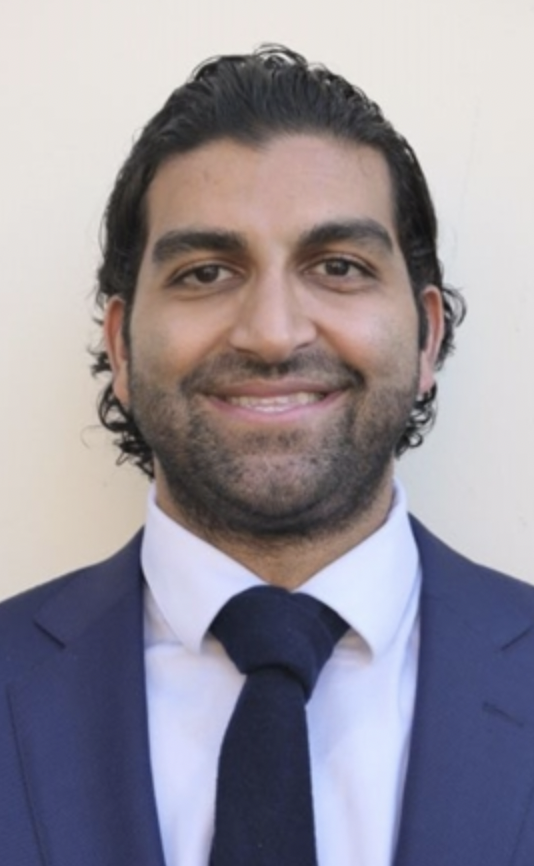
Single-tooth implants with Dr. Rickin Vibhakar, DDS
Updated November 2026 · View credentials
Advanced implant training, NY Implant Institute
Rated 4.7 by Google reviewers
Active member, Kois Center
500+ CE hours toward AGD Fellowship
A single-tooth implant anchors directly into the jawbone rather than borrowing support from adjacent teeth. That is why it is often the most conservative long-term option, even when a bridge might seem like the quicker fix.
At Higher Standards Dental Studio on Decatur Square, we approach a single missing tooth as its own case, not a smaller version of a larger implant plan. A single-tooth implant is part of our broader dental implants services.
for the implant to integrate before the final crown
of the healthy teeth beside the gap
planning from the finished tooth backward
a temporary option is planned for the healing phase
A bridge is not the wrong choice for everyone. We review both options with you, including what each one means for the surrounding teeth, so the decision fits your situation rather than a default.
Support: Anchors directly into the jawbone
Neighboring teeth: Left untouched
Timeline: Implant surgery, then about three to four months of healing before the final crown
Support: The two teeth on either side of the gap
Neighboring teeth: Reshaped and crowned
Timeline: No implant surgery and no months of healing
Can make sense: When the neighboring teeth already need crowns. Dental bridges
A single-tooth implant is sometimes assumed to be the simpler case, but a natural result depends on the gum tissue, the bone at the site, nearby anatomy, and the teeth beside and opposite the gap. 3D CBCT imaging positions the implant where the crown needs to sit.
The ideal position of the visible tooth is set first, since the implant needs to support that exact position and angle.
A site that has been empty for a while can lose bone, which sometimes calls for bone grafting before placement.
In visible areas, the shape of the gum tissue around the future crown affects how natural the result looks.
We confirm the teeth beside the gap are healthy enough that no extra treatment is needed.
Habits matter too. Smoking is linked to higher implant failure, so we talk it through openly and without judgment during planning.
3D CBCT imaging positions the implant so it supports where the crown needs to sit.
Dr. Vibhakar places the implant in the jawbone.
The implant integrates with the bone while a planned in-between option keeps you from an unplanned gap.
Digital impressions create a crown that matches the shade, shape, and contour of the tooth it replaces.
A healing abutment with a temporary removable tooth, such as an Essix retainer or a flipper.
A custom abutment during the healing phase, depending on your case.
A temporary crown held by a screw while the implant integrates.
With a single implant, one doctor plans the surgery and the crown, so the implant is placed where the final tooth needs it. Dr. Rickin Vibhakar places and restores implants in the same office, and his training includes advanced implant work at the NY Implant Institute and guided bone regeneration with Dr. Matt Fein and Dr. Israel Puterman.
Nitrous oxide, weighted blankets, and noise-canceling headphones are available if you want extra comfort.

Advanced implant training
Guided bone regeneration training with Dr. Matt Fein and Dr. Israel Puterman
Including private practice in Manhattan
We offer financing through CareCredit and Cherry for patients whose coverage does not fully offset implant care.
Here are answers to some common questions about replacing one tooth with an implant. For anything else, call us at (404) 577-9020.
The implant needs about three to four months to integrate with the bone before the final crown is placed, and we plan a temporary solution for the in-between period.
The implant needs time to fuse with the jawbone, and that integration is what allows it to support the crown over the long term.
It depends on your bone, your neighboring teeth, and your goals. An implant leaves the teeth beside the gap untouched, while a bridge can be completed without surgery, and we review both with you.
No. We plan the in-between phase, which may include a healing abutment with a temporary removable tooth such as an Essix retainer or a flipper, a custom abutment, or a screw-retained temporary crown.
Sometimes. A site that has been empty for a while can lose bone, which can call for bone grafting before the implant is placed. 3D CBCT imaging shows how much bone is there.
Smoking is linked to higher implant failure, so we talk it through openly and without judgment during planning.
Bone at an empty tooth site tends to shrink over time, so the sooner a gap is planned for, the more options you usually have.
Bone at an empty tooth site tends to shrink over time, so the sooner a gap is planned for, the more options you usually have. Find out whether an implant or a bridge is the better fit for the missing tooth.
315 West Ponce de Leon Avenue, Suite 240, Decatur, GA 30030
Mon to Thu: 8:00am to 5:00pm | Fri to Sun: Closed
"*" indicates required fields